
Latest Tech
Browse uncategorized posts, mixed topics, and general updates that don’t fit into specific categories on our website.

Artificial Intelligence and the New Era of Human Expertise
Welcome to the first edition of The Intelligence Shift, a monthly series that explores how artificial intelligence is transforming the meaning of expertise, authority, and knowledge.
In this opening article, we examine the rapid rise of synthetic intelligence, the gradual decline of traditional authority, and the emerging human abilities that will matter most in an age where machines produce answers and people interpret meaning.
For centuries, human expertise fueled progress. Society relied on doctors to diagnose illness, lawyers to interpret laws, teachers to guide learning, and engineers to design infrastructure. Expertise represented far more than technical skill—it formed a social contract. People believed knowledge lived inside individuals who earned it through years of education, discipline, and real-world experience.
However, a profound shift has begun.
Artificial intelligence now changes not only how we access information but also how we define knowledge itself. When a machine can summarize textbooks, construct legal arguments, or generate business strategies within seconds, an unavoidable question emerges:
What does it mean to be an expert in a world where intelligence no longer belongs exclusively to humans?
This transformation does not tell a story of replacement. Instead, it reveals a story of redefinition. Authority, trust, and meaning are shifting beneath our feet.
1. Expertise Once Meant Scarcity; Now It Means Abundance
Throughout most of human history, knowledge remained difficult to access. Several barriers restricted learning:
- geography
- institutional control
- limited literacy
- restricted mentorship
- time-intensive education
Because learning progressed slowly and unevenly, expertise remained rare.
Artificial intelligence has dramatically changed that reality.
Today, a teenager with a smartphone can instantly access:
- medical explanations
- legal frameworks
- coding tutorials
- philosophical discussions
- scientific summaries
- business strategies
As a result, the appearance of expertise now surrounds us—fast, fluent, and confident.
However, this accessibility creates a paradox.
When everyone gains instant answers, the value of simply knowing information decreases.
Modern expertise no longer revolves around possessing facts. Instead, it revolves around interpreting knowledge, placing it in context, and challenging assumptions.
2. The Illusion of Competence With Artificial Intelligence
AI systems communicate with remarkable confidence. They generate structured arguments, polished explanations, and clear reasoning. Rarely do they hesitate unless users explicitly request uncertainty.
Consequently, these systems create a powerful illusion:
Fluency often disguises misunderstanding.
When people read coherent AI responses, they often feel knowledgeable. However, clarity does not equal comprehension.
Consider the education system. Memorization may help students pass exams, yet genuine understanding requires deeper thinking and interpretation.
AI introduces a new cognitive trap:
- People outsource thinking.
- They absorb the generated answer.
- They assume the knowledge belongs to them.
The danger does not lie in AI replacing experts.
The danger lies in convincing non-experts that they possess expertise.
3. The Erosion of Trust
As artificial intelligence performs increasingly complex tasks, people begin to question the value of human expertise.
Today AI systems can:
- write code
- analyze data
- draft reports
- interpret documents
- generate creative ideas
Consequently, traditional authority structures begin to weaken.
Students challenge teachers with AI-generated arguments. Patients arrive with machine-generated diagnoses. Employees question managers because “the model suggested another answer.”
Previously, expertise relied on a simple statement:
“I know this because I studied it.”
Now many people believe:
“I know this because the system confirmed it.”
Yet AI does not function as a neutral authority. Every model reflects the biases, gaps, and assumptions embedded in its training data.
Therefore, when trust shifts entirely from humans to machines, society risks losing something critical—the ability to question the origin of knowledge itself.
4. The New Role of the Expert
If machines generate answers instantly, what role remains for human experts?
Experts should not compete with AI in memorizing information. They should not attempt to produce faster summaries either.
Instead, the expert of the future will become:
- a navigator of uncertainty
- a critic of machine-generated conclusions
- a contextual interpreter of information
- a guardian of nuance
- a translator between human values and machine logic
In other words, the most valuable expert will not know the most facts.
The most valuable expert will understand what knowledge actually means.
This shift marks a major transformation—from expertise as possession to expertise as interpretation.
5. The Rise of Synthetic Knowledge
Another important transformation has already begun.
Artificial intelligence increasingly learns from:
- synthetic datasets
- model-generated text
- machine-produced examples
As a result, AI systems increasingly learn from other AI systems.
This recursive loop creates a new category of knowledge—synthetic, self-referential, and increasingly detached from human experience.
This development raises difficult questions:
- What happens when machines produce the majority of information?
- Who verifies that knowledge?
- How can experts detect errors that spread through automated systems?
- What defines expertise when human observation no longer anchors knowledge?
Society has not yet developed answers to these questions.
Nevertheless, we must begin asking them now.
6. Human Skills That Grow More Valuable
Despite enormous technological progress, artificial intelligence cannot replicate certain forms of expertise.
Not because they require complex algorithms.
Because they require human experience.
These capabilities include:
- judgment
- ethical reasoning
- empathy
- lived experience
- emotionally grounded creativity
- cultural awareness
- the courage to challenge assumptions
AI produces answers.
Humans create meaning.
Therefore, the future will favor people who successfully bridge machine intelligence and human insight.
7. A New Social Contract for Artificial Intelligence Knowledge
Humanity now enters a new relationship with intelligence.
Previously, society followed a simple model:
Experts knew. Everyone else followed.
The emerging model looks very different:
Machines generate information. Humans interpret it.
Consequently, this transformation demands significant adjustments:
- new education systems
- updated professional standards
- stronger ethical frameworks
- better methods for verifying truth
- new expectations for expertise
Human expertise does not disappear.
Instead, it evolves.
The Bottom Line: Expertise Is Transforming
Artificial intelligence has not destroyed expertise.
Instead, it has exposed its true nature.
Expertise never meant:
- memorizing information
- retrieving facts quickly
- generating answers instantly
True expertise involves:
- discernment
- contextual understanding
- interpretation
- wisdom
- the ability to recognize what machines overlook
The age of artificial intelligence does not weaken human intelligence.
Instead, it demands a deeper, more reflective version of it.
We are not witnessing the end of expertise.
We are witnessing the end of old expertise—and the emergence of something far more complex, nuanced, and powerful.
Welcome to The Intelligence Shift.
See Also: Controlling the Connectivity Stack: G+D Reveals New Innovations at MWC
See Also: AI-Iran War Videos Go Viral as Creators Cash In on New Tech
Related Post: China pins hopes on society-wide AI push to add jobs, rejuvenate economy
Controlling the Connectivity Stack: G+D Reveals New Innovations at MWC
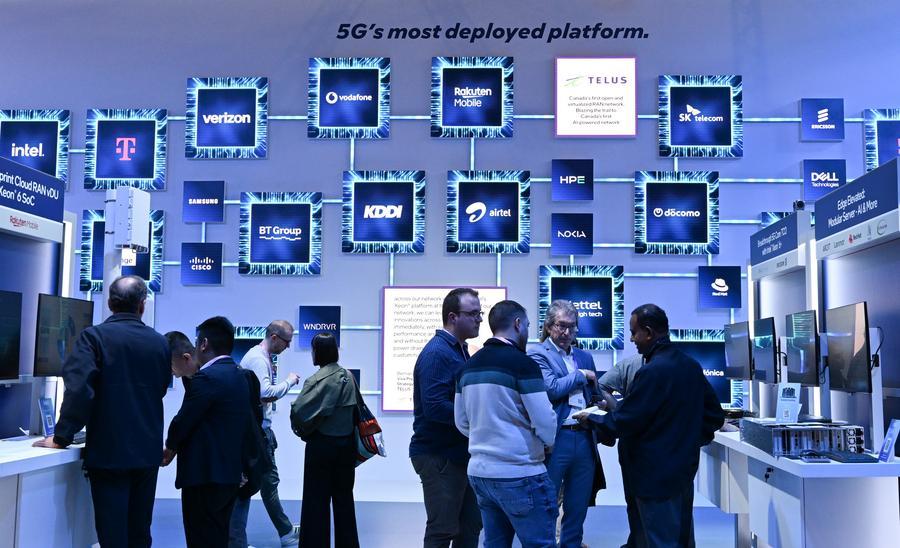
Controlling the Connectivity stack is at the core of modern mobile networks, enabling seamless communication, fast data transfer, and secure connections across the globe. At the Mobile World Congress (MWC), G+D showcased innovations that promise to redefine how telecom operators manage connectivity, improve efficiency, and enhance user experiences.
In a rapidly evolving telecom landscape, controlling the connectivity stack ensures operators stay ahead in network performance, security, and scalability. G+D innovations demonstrated practical applications of next-generation network technologies, ranging from advanced SIM management to embedded connectivity and digital security solutions.
Why Controlling the Connectivity Stack Matters
Mobile networks have grown increasingly complex, with multiple layers of hardware, software, and protocols interacting in real time. Today, mobile connectivity technology not only demands more than speed but also, consequently, requires precision, flexibility, and intelligent management. Controlling the connectivity stack allows operators to:
- Optimize network performance
- Reduce downtime and service interruptions
- Increase customer satisfaction
- Secure critical data and digital identities
At MWC, G+D highlighted strategies for maintaining control over every layer of connectivity, ensuring networks can handle growing demands from IoT devices, 5G deployments, and AI-driven applications.
Key G+D Innovations Highlighted at MWC
- Advanced SIM and eSIM Management
G+D presented solutions that allow telecom providers to manage millions of SIM and eSIM profiles efficiently, enabling remote activation, provisioning, and secure authentication. - Embedded Connectivity Solutions
Embedded connectivity in IoT devices was a major focus. By integrating secure connectivity directly into devices, businesses can deploy networks faster and reduce operational costs. - AI-Driven Network Optimization
G+D introduced AI-powered tools to monitor traffic, predict failures, and optimize the connectivity stack dynamically, improving network performance and user experience. - Next-Generation Security Protocols
Security remains a top priority. Innovations in encryption, identity verification, and fraud prevention were showcased to protect networks from emerging threats. - Global Interoperability and Scalability
Furthermore, G+D emphasized tools that allow telecom providers to scale services globally while simultaneously maintaining high performance and interoperability across devices and regions.
Impact on the Future of Mobile Networks
The future of mobile networks depends on the connectivity stack being flexible, intelligent, and secure. G+D innovations at MWC demonstrated how operators can meet increasing demands from 5G, IoT, and AI-powered applications.
By controlling every layer of the connectivity stack, companies can improve service reliability, reduce latency, and ensure data integrity, ultimately delivering a superior experience to end users. The technologies presented at MWC will likely influence network architecture and digital strategies for years to come.
At Mobile World Congress, G+D reaffirmed its position as a leader in mobile connectivity technology. By controlling the connectivity stack, operators can optimize performance, enhance security, and adapt to the rapidly evolving digital ecosystem. The insights shared at MWC demonstrate that intelligent network management, innovative security solutions, and scalable infrastructure are the pillars of the future mobile landscape.
For telecom operators, businesses, and technology enthusiasts, these developments indicate that, as a result, the future of connectivity will be smarter, faster, and more secure than ever.
See Alao: Technology Trends 2026 That Will Shape the Future
See Also: Exclusive: Trump reviews options to curb energy prices as Iran strikes roil markets
Technology Trends 2026 That Will Shape the Future
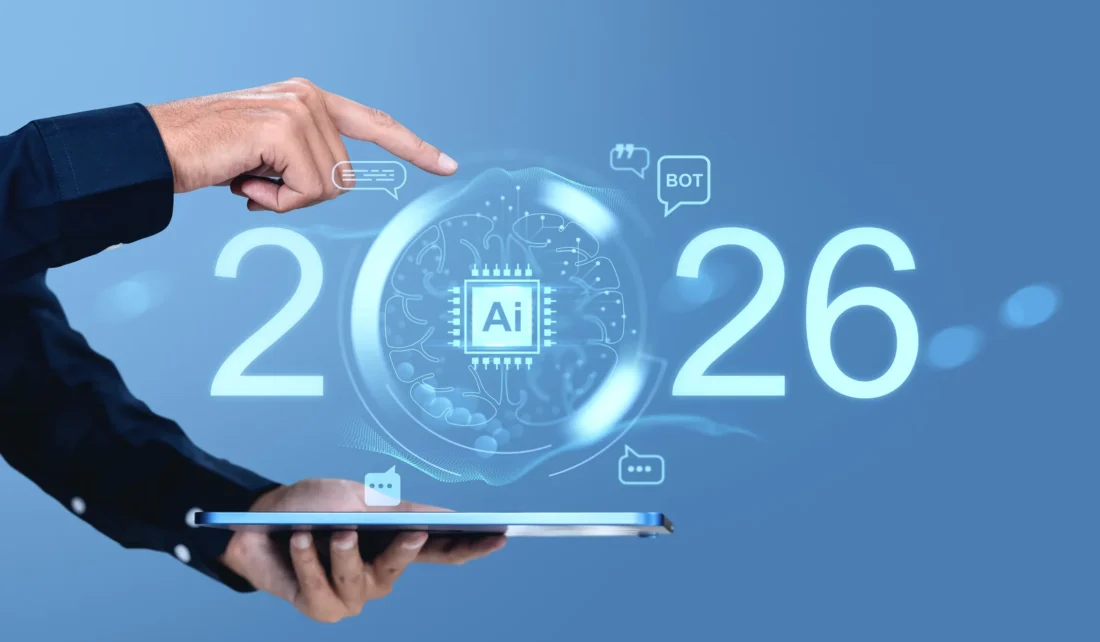
Self-driving vehicles, humanoid robots, AIs trained in space, and the possible successor to the smartphone all in the Technology trends 2026.
As the emergence of ChatGPT in late 2022, a strong sense of rapid technological acceleration has been experienced worldwide. However, major technological revolutions are rarely completed overnight. Instead, technological transformations are usually built gradually as new infrastructure is developed and social adoption increases for the Technology trends 2026.
According to Esteve Almirall, a professor at Esade and innovation expert, the coming years will mark a turning point. In an article published in La Vanguardia, it was explained that technological shifts require time because new infrastructure must be constructed before mass adoption occurs. In the past, global internet networks were built to support digital growth. Today, massive AI infrastructure and advanced data centers are being constructed to support artificial intelligence systems.
It has been predicted that 2026 will become a milestone year for technology trends, as artificial intelligence adoption will be expanded and digital transformation will accelerate across industries.
Below are the 12 technology trends 2026 that are expected to shape the global agenda.
1. Artificial Intelligence Will Continue to Expand
Artificial intelligence development can no longer be slowed. AI models are being improved rapidly, and major investments are being made by companies and governments worldwide in technology trends 2026.
The question is no longer whether AI will outperform humans in certain tasks. Instead, the global economy will be reorganized around this new reality. As a result, AI transformation will increasingly be treated as both an economic opportunity and a geopolitical competition.
2. AI Agents Will Become More Common
A major shift will be introduced through AI agents. Unlike traditional AI systems that only respond to instructions, intelligent agents will be designed to act independently.
Through language models and automated reasoning, tasks such as purchasing goods, planning travel, negotiating deals, and managing business operations will be handled automatically. By 2026, these systems are expected to be integrated gradually into everyday digital experiences.
3. Autonomous Mobility Will Reshape Cities
In many major cities in the United States and China, autonomous vehicles are already being deployed. Driverless taxis and delivery vehicles are being tested and expanded in urban areas.
As this technology continues to mature, fewer privately owned cars will be required. Consequently, urban design may be reshaped, congestion could be reduced, and transportation networks will be optimized.
4. Logistics Will Be Transformed in Technology trends 2026
A new era of logistics efficiency will be created through autonomous trucks and advanced battery technologies.
Lower transportation costs are expected to be achieved through sodium battery systems, which are cheaper and longer-lasting than traditional lithium batteries. As supply chains become shorter and more efficient, industries will gain stronger competitive advantages.
5. Humanoid Robots Will Enter the Workforce
The arrival of humanoid robots is expected to accelerate. These machines are already being developed to assist in factories, hospitals, and logistics centers.
According to predictions made by Lei Jun, CEO of Xiaomi, many roles currently performed by humans may eventually be supported or replaced by robots. Large-scale adoption is expected to begin gradually in the coming years.
6. Language Barriers Will Be Reduced
Real-time translation technology is being developed by major companies such as Apple and Google. Through smart headphones and AI-powered systems, conversations between people speaking different languages will be translated instantly.
Although language skills will still be valued, the barrier created by language differences will be significantly reduced.
7. Organizations Will Be Rebuilt Around AI
Businesses are expected to undergo significant structural transformation. Smaller teams may be supported by powerful digital systems, including AI agents, robotics, and automation tools.
In these hybrid workplaces, human workers will coordinate intelligent systems, while decision-making processes will increasingly be supported by data-driven platforms.
8. Artificial Intelligence Will Move Into Space
Space may become a new location for advanced computing. Due to favorable thermal and energy conditions, data centers in orbit could be established.
A recent collaboration between Nvidia and StarCloud has already demonstrated the possibility of training AI models in space. If launch costs continue to decline, space computing infrastructure could expand rapidly.
9. Telecommunications Will Expand Globally
Global communication networks are expected to be transformed. Mobile phones are already being connected directly to satellites through systems such as Starlink.
In addition, 10G network technology is currently being tested in China. These developments may significantly disrupt traditional telecommunications companies.
10. AI Scientists and Engineers Will Emerge
Artificial intelligence systems capable of conducting research independently are being developed. Through autonomous experimentation and analysis, scientific discovery could be accelerated.
This means that innovation capacity will no longer depend only on human expertise. Instead, AI-driven research systems will multiply scientific productivity.
11. The Successor to the Smartphone Is Being Explored
For years, companies have attempted to develop devices capable of replacing smartphones. Technologies such as virtual reality headsets and smartwatches have been introduced, but none has fully replaced the smartphone.
However, new attempts are now being made. OpenAI has recruited Jony Ive, the designer behind the iPhone and iPod, to explore the next generation of computing devices.
12. Hyperloop Development Will Continue in China
While several countries have abandoned the Hyperloop concept, China continues to invest in the technology.
High-speed transport systems capable of reaching speeds above 1,000 km/h are currently being researched. If successful, this transportation system could reshape regional economies and dramatically reduce travel time between major cities.
The technology trends 2026 highlight how rapidly innovation is advancing. Artificial intelligence, robotics, autonomous transportation, and advanced communication networks are being developed simultaneously.
As these technologies mature, industries will be transformed, new economic opportunities will emerge, and everyday life will be reshaped. Although these changes will not occur instantly, the foundation for the next technological era is already being built.
See Also:
US: Trump Warns Microsoft, Google, Other Tech Giants to “Stop Hiring In India”

AI-Iran War Videos Go Viral as Creators Cash In on New Tech
The rise of AI-generated Iran war videos has created a new challenge for social media platforms and online audiences. Content creators now use advanced artificial intelligence tools to produce realistic war footage within minutes. These clips spread quickly across social media and often attract millions of views.
Many creators upload AI-generated Iran war videos to gain engagement, increase followers, and earn money through platform monetization programs. The trend highlights how artificial intelligence now shapes the way people consume news about global conflicts.
The Rapid Rise of AI-Generated Iran War Videos
Recent reports reveal that AI-generated Iran war videos have surged online as tensions in the Middle East increase. Digital investigators have discovered numerous fake videos showing missile strikes, explosions, and battlefield scenes that never happened.
Modern AI tools allow creators to produce highly convincing war footage in minutes. In the past, producing such realistic content required professional video production teams. Today, generative AI models and video diffusion tools make it easy for anyone to create dramatic combat scenes.
Because these videos appear realistic, many viewers struggle to tell the difference between authentic footage and synthetic media.
Why Creators Produce Ai War Videos
Many online creators produce AI-generated Iran war videos primarily to attract attention and generate revenue. Social media algorithms reward content that receives high engagement, including likes, shares, and comments.
When a video about war goes viral, creators can earn money through advertising programs and creator revenue-sharing systems. Some individuals even operate networks of fake accounts to distribute large volumes of AI-generated content.
Investigations recently revealed that dozens of social media accounts circulated AI war footage to gain views and manipulate public conversations online.
Social Media Platforms Respond to AI War Content
Social media companies have started to react to the growing flood of AI-generated Iran war videos.
One major platform introduced new rules that require creators to clearly label AI-generated war footage. Creators who fail to disclose that their content uses AI risk losing access to monetization programs.
The new policy aims to protect the authenticity of information during wartime and prevent creators from exploiting fake war footage for profit.
Platforms also plan to deploy AI detection systems and human moderators to identify manipulated videos and reduce misinformation.
The Danger of AI-Generated War Footage
The spread of Ai Iran war videos creates serious risks for public understanding of global events.
Fake footage can:
- Mislead millions of viewers
- Spread propaganda during conflicts
- Damage trust in real journalism
- Make it harder to verify authentic war evidence
Experts warn that synthetic media can easily distort narratives and influence public opinion during times of geopolitical tension.
As artificial intelligence becomes more powerful, distinguishing between authentic and fabricated content will become even more difficult.
How Viewers Can Recognize AI-Generated War Videos
To avoid falling for Ai war videos, viewers should always verify the source of the content.
Follow these simple steps:
- Check whether the video comes from a trusted news organization.
- Look for AI disclosure labels on social media platforms.
- Search for the same footage on verified news websites.
- Examine unusual visual details such as inconsistent shadows or unrealistic explosions.
Critical thinking remains one of the most effective defenses against AI-generated misinformation.
The Future of AI-Generated War Content
The explosion of Ai Iran war videos shows how artificial intelligence now influences modern information warfare. While AI technology offers powerful creative tools, it also introduces new risks for misinformation and digital manipulation.
Governments, technology companies, and journalists will need stronger tools and policies to combat fake AI media. Without proper safeguards, AI-generated content could reshape the way wars and global crises appear online.
For now, viewers must stay cautious and verify every viral video before believing it.
Related Posts:
Iran selects new supreme leader as Middle East war enters second week
Iran warns war is entering “new phase,” threatens retaliation on energy infrastructure
How to Set Up Your New iPhone and Transfer All Your Data Easily
How to Reset Apple Watch (Too Many Passcode Attempts)
How to Reset Apple Watch After Too Many Passcode Attempts (2025 Guide)
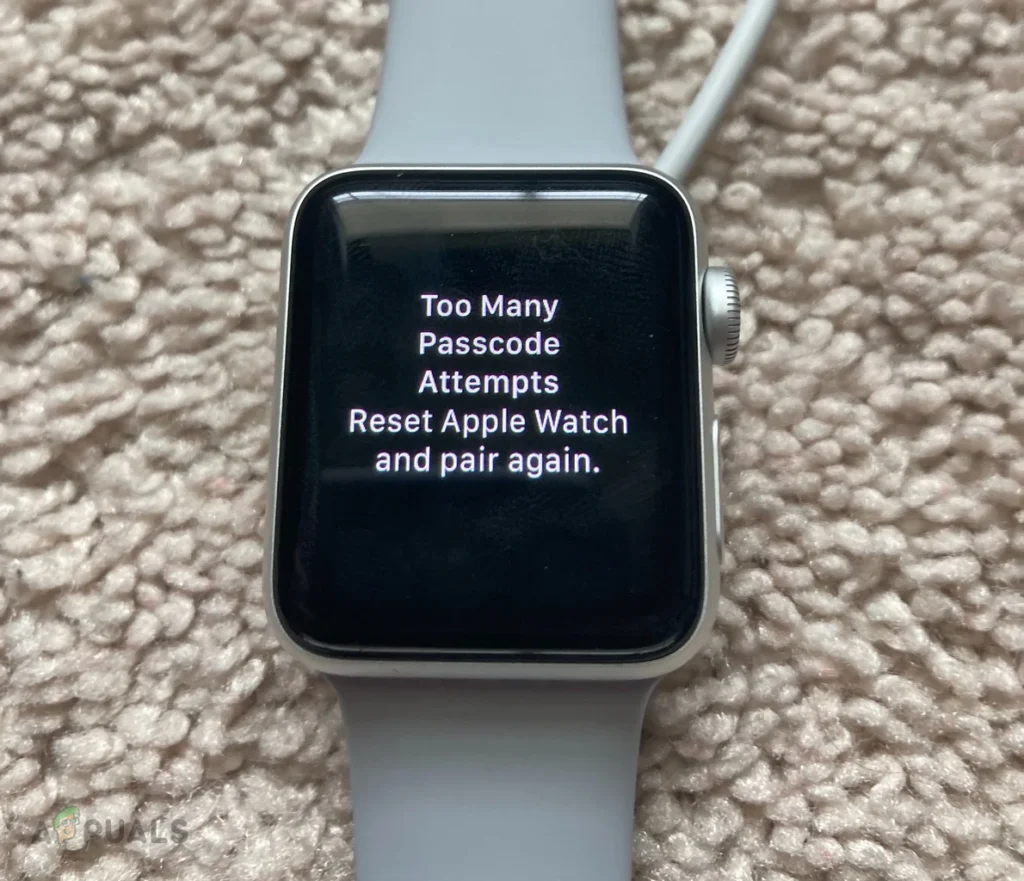
Locked out of your Apple Watch after too many incorrect passcode attempts? Don’t worry—this is a common issue and can be fixed with a full reset. In this guide, you’ll learn exactly how to reset your Apple Watch after too many passcode attempts, step by step.
Whether you use an Apple Watch Series 3, 7, 8, Ultra, or SE, this tutorial will help you erase your device and get it working again.
Why Is Your Apple Watch Locked?
If you enter the wrong passcode six times in a row, your Apple Watch will display the message:
“Too many passcode attempts. Reset Apple Watch and pair again.”
This is a security feature to protect your data. The only way to regain access is to erase your Apple Watch, then restore it from a backup or set it up as new.
Method 1: Reset Apple Watch Using iPhone (Recommended)
If your Apple Watch is still paired with your iPhone, follow these steps:
- Open the Watch app on your iPhone
- Tap All Watches (top-left corner)
- Tap the ⓘ icon next to your locked Apple Watch
- Select Unpair Apple Watch
- If prompted, enter your Apple ID password to disable Activation Lock
- Once unpaired, your Apple Watch will be erased
🔄 You can now pair it again using the same iPhone and restore from backup.
Method 2: Reset Apple Watch Without iPhone (On the Watch Itself)
If you don’t have access to your iPhone, you can erase the watch directly:
- Place your Apple Watch on its charger
- Press and hold the Side Button (below the Digital Crown) until the power screen appears
- Press and hold the Digital Crown
- Continue holding until you see “Erase all content and settings“
- Tap Reset → Then tap Reset again to confirm
The watch will erase itself and reboot. Once done, you can pair it with your iPhone again.
💡 Important: You’ll still need your Apple ID and password to remove Activation Lock after the reset.
What Is Activation Lock?
Activation Lock is tied to your Apple ID. After resetting the Apple Watch, you must enter the same Apple ID credentials to finish setup. This prevents stolen watches from being reused.
Tips to Avoid Getting Locked Out Again
- Use biometric unlock (iPhone wrist detection or Face ID)
- Write down your passcode or store it in a password manager
- Use a simple 4-digit passcode if 6 digits are hard to remember
- Enable Auto Unlock with iPhone (Settings → Passcode)
If you’re stuck with the “Too many passcode attempts” message, don’t panic. You can reset your Apple Watch using your iPhone or the watch itself. Just remember to have your Apple ID ready to complete the process.
Once reset, you can quickly restore from backup or start fresh, and you’ll be back to tracking workouts, checking messages, and using apps in no time.