

Tech News
Get the latest techy news, product launches, software updates, AI developments, and digital trends from around the world.
JUST IN: Jeff Bezos Sells $665 Million Worth of Amazon (AMZN) Shares
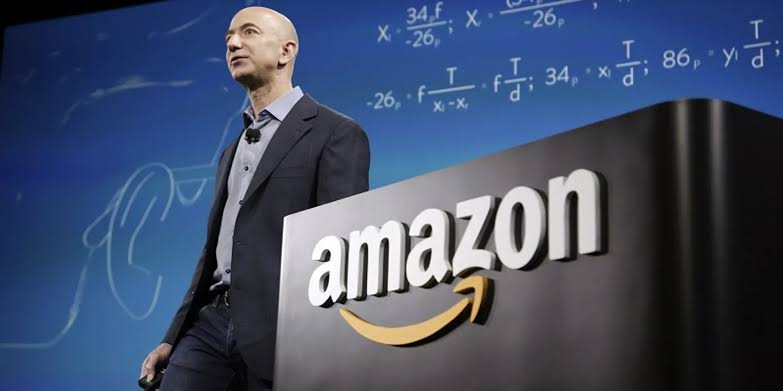
- In late June 2025, Jeff Bezos founder and executive chair of Amazon—sold approximately 3.3 million shares, netting around $736.7 million (about $737 million) at an average price of $221.56 per share .
- Notably, the major portion (~$686 million) of that sale occurred on June 27, coinciding exactly with his wedding to Lauren Sánchez in Venice .
Planned & Transparent
- The sale was executed under a Rule 10b5‑1 trading plan adopted in March 2025. This automated system allows company insiders to sell shares at predetermined conditions, helping avoid accusations of insider trading .
- It marked Bezos’s first stock sale of 2025, yet he still retains a massive ~905 million shares, with up to 21.7 million more shares available for sale under the same plan .
Context & Motivation
- Bezos has historically used hat large stock sales to raise capital for ventures like Blue Origin, The Washington Post, and philanthropic causes .
- In 2024 alone, he sold over $13.4 billion worth of Amazon stock .
- The current structured sales (up to 25 million shares, worth ~$4.75 billion through mid‑2026) are part of a long-range financing approach .
Market Reaction & Outlook
- These filings triggered a modest positive response in Amazon’s stock, as transparency around insider selling plans can help stabilize investor sentiment.
- While insiders selling might raise eyebrows, such pre-scheduled trades under a 10b5-1 plan are often seen as routine and not indicative of immediate lack of confidence .
- Bezos’s remaining stake—about 9% of Amazon—still leaves him firmly aligned with the company’s long-term growth
Jeff Bezos’s late-June sale of ~$737 million in Amazon stock was highly planned, fully disclosed, and part of a broader strategy to fund other ventures and personal commitments. It’s unlikely to signal any negative outlook on Amazon itself, given the ongoing 10b5‑1 plan and his continued massive ownership stake.
Meta Invests in Ray-Ban Parent EssilorLuxottica with 3% Equity Stake

Meta’s €3 billion, ~3% strategic stake in EssilorLuxottica underscores its commitment to leading the smart eyewear revolution. The investment solidifies a deepening partnership benefiting from EssilorLuxottica’s scale and Meta’s AI capabilities. With over 2 million smart glasses sold and more advanced 3rd-gen models in development, this move positions Meta to potentially boost uptake of AI-driven wearables dramatically in the next 12–18 months.
AI-Powered Rubio Impersonator Exposes New Risks in Global Diplomacy

In a startling development that highlights the growing intersection of artificial intelligence and international relations, a leaked diplomatic cable has revealed that foreign ministers were recently contacted by an AI-generated impersonation of U.S. Senator Marco Rubio. The incident has raised serious concerns about the integrity of global diplomatic communication and the growing threat of synthetic media manipulation.
According to a confidential cable reviewed by international media, an AI-powered voice deepfake resembling Senator Rubio was used in phone calls to multiple foreign ministers. While the exact content and purpose of the calls remain undisclosed, officials confirm that the impersonator successfully engaged with high-level diplomats, under the false pretense of being the Florida senator.
The impersonator reportedly used advanced voice cloning technologies, replicating Rubio’s tone, speech cadence, and language patterns to a degree that was convincing enough to bypass initial skepticism.
This isn’t just a political prank it’s a wake-up call for governments, diplomats, and intelligence agencies worldwide. The incident showcases how AI-generated voices and personas can be weaponized to:
- Manipulate diplomatic relationships
- Spread misinformation under official identities
- Extract sensitive information under false pretenses
- Erode trust in voice-based communications
While cyber threats have long been on the radar of national security experts, the integration of generative AI into voice phishing (vishing) and impersonation campaigns marks a dangerous escalation.
The New Face of Deepfakes
Traditionally, deepfakes have been associated with manipulated videos, but voice cloning has quietly become one of the most potent tools in the disinformation arsenal. Using just a few minutes of audio samples, modern AI tools can reproduce someone’s voice with shocking accuracy.
Several companies now offer AI voice synthesis platforms that are either open-source or commercially available. In the wrong hands, these technologies can be used to mimic:
- Political leaders
- CEOs
- Military officials
- News anchors
- Or in this case, U.S. senators
Global Ramifications
The Rubio impersonation case is not an isolated incident it’s part of a larger trend of synthetic identity manipulation aimed at destabilizing public trust in institutions. If foreign ministers can be tricked into conversations with AI-generated counterparts, the implications for diplomatic sabotage, international crises, and even conflict escalation are profound.
A misinterpreted call could lead to:
- Policy misalignment
- Public misinformation
- Diplomatic rifts
- Loss of classified data
To prevent future incidents, security experts recommend several urgent actions:
- Implement Voice Authentication Protocols: Secure diplomatic communications with biometric or contextual verification.
- Educate Diplomats and Staff: Conduct regular training on recognizing deepfakes and social engineering tactics.
- Monitor AI Threat Vectors: Establish internal monitoring systems to flag suspicious voice-based interactions.
- Promote AI Legislation: Push for global agreements regulating misuse of AI-generated voices and identities.
🇺🇸 Rubio Responds
While Senator Rubio has not publicly commented on the impersonation, sources close to his office have indicated that the incident is being taken seriously and has been referred to federal investigators.
A senior intelligence official, speaking on condition of anonymity, said:
“This is not just about Rubio. It’s about the integrity of our entire diplomatic communications infrastructure.”
The misuse of AI to impersonate public figures is no longer speculative it’s happening now. The case of the AI-powered Rubio impersonator demonstrates just how easily synthetic voices can breach international boundaries and sow confusion at the highest levels of government.
As artificial intelligence continues to evolve, so too must our defense systems. Without immediate action, the line between real and artificial in global diplomacy may become dangerously blurred.
Why Lithuania Is Setting Bold Ambitions in the Space Technology Sector
Once best known for its medieval castles, vibrant tech startups, and basketball prowess, Lithuania is now reaching for the stars literally. The Baltic nation is making serious moves in the space technology sector, aiming to position itself as a significant player in the European and global aerospace industry.
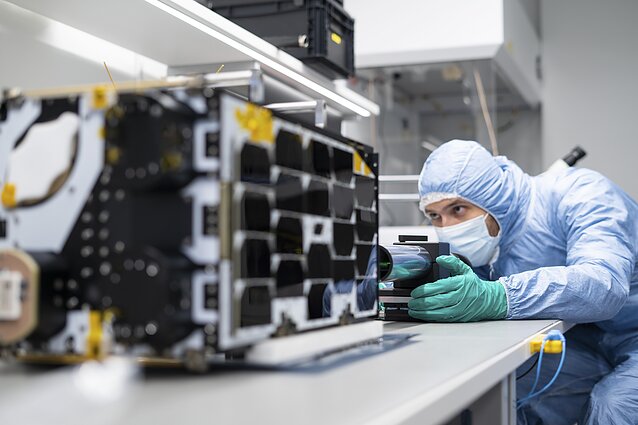
Despite its modest population of just under 3 million, Lithuania is strategically investing in space innovation, with support from both public institutions and private enterprises. The country’s ambitious pivot toward space technology is rooted in its well-established ICT sector, research-driven universities, and membership in the European Space Agency (ESA), which it joined as an associate member in 2021.
“Space tech is no longer reserved for the global superpowers. Smaller nations like Lithuania can now contribute real value,” says Marius Skarupskas, Lithuania’s Vice Minister of Economy and Innovation.
Recent Milestones and Missions
Lithuania has already launched a number of small satellites in collaboration with international partners. The most notable include:
- LituanicaSAT-1 and LitSat-1 – Lithuania’s first-ever satellites, launched in 2014.
- LituanicaSAT-2 – A CubeSat focused on advanced plasma propulsion technology, showing Lithuania’s growing sophistication in satellite engineering.
These missions aren’t just symbolic; they represent a foundation for commercial innovation, particularly in Earth observation, environmental monitoring, and satellite communication.
Strong Academic and Industrial Base
At the heart of Lithuania’s space ambitions is its robust research ecosystem. Vilnius University, Kaunas University of Technology, and Vilnius Tech are developing programs focused on:
- Aerospace engineering
- Artificial intelligence for orbital data processing
- Nano- and microsatellite development
In parallel, Lithuanian companies are partnering with ESA on projects ranging from materials testing in space to satellite data applications for agriculture and disaster prevention.
Collaboration Over Competition
Lithuania’s space strategy is built on international collaboration. Through partnerships with the ESA, NASA, and Nordic space agencies, Lithuanian firms and researchers are gaining access to advanced facilities and orbital missions. The country is also tapping into EU funding, including Horizon Europe and Copernicus data programs, to support startups in the geospatial analytics and satellite imaging sectors.
Dual-Use Technology and National Security
With growing geopolitical tensions in Eastern Europe, Lithuania’s space ambitions also include a defense dimension. Space-based intelligence and surveillance tools are being considered for future defense infrastructure. The Ministry of National Defence has shown interest in using satellite technologies for border monitoring, cybersecurity, and early-warning systems.
A Sustainable Space Vision
In contrast to space races focused purely on dominance, Lithuania is emphasizing responsible and sustainable space exploration. The government has proposed policies aimed at space debris mitigation, ethical AI use in satellite operations, and open data sharing for climate research.
What’s Next for Lithuania in Space?
With momentum building, Lithuania’s space roadmap for the next decade includes:
- Establishing a national space agency
- Launching more CubeSat missions
- Developing domestic launch capabilities
- Supporting deep-tech startups in the space sector
- Creating a Baltic regional hub for satellite-based services
From the Baltics to the Cosmos
Lithuania may be small in size, but its aspirations are anything but. By combining strategic vision, international collaboration, and deep-tech innovation, the country is carving out a unique identity in the global space economy—one that shows how even the smallest nations can have a stellar impact.
Chinese Video Game Draws Criticism for Reinforcing Gender Stereotypes
A new interactive film-style game called Revenge on Gold Diggers (later renamed Emotional Fraud Simulator) has sparked a major sexism debate in China, combining strong sales on Steam with intense online backlash.

Game Overview
It includes over 472 minutes of live-action footage, supports 38 different endings, and initially flew high—hitting the top 5 on Steam global sales, even surpassing titles like Black Myth: Wukong
Released on June 19, 2025, by Front Studio (director Mark Wu), the game features a male protagonist targeting a group called “Cinderella,” a syndicate of manipulative women exploiting men financially thinkchina.sg+2en.wikipedia.org+2sixthtone.com+2.
Criticism: Reinforcing Sexist Tropes
Critics, including gender activists and cultural commentators, argue the game:
- Labels women as deceitful “gold diggers” and promotes a misogynistic worldview.
- Uses damaging language in character dialogue one quote reads, “Want to know how much a man loves you? See how much he spends,” reinforcing stereotypes.
- Depicts women as emotionally manipulative fraudsters, conflating all “gold diggers” with female characters.
Young female voices on social media highlight these concerns:
“It portrays women as underprivileged and needing to please men to survive,”
Developers’ Defense and Support
The developers responded by:
- Changing the title to Emotional Fraud Simulator, though content remained unchanged.
- Arguing the game is a role-based interactive anti-fraud tool, encouraging discussion about romantic scams.
- Describing characters as morally complex rather than one-dimensional caricatures.
Some state media echoed this idea, praising the game’s role in “strengthening awareness of relationship safety”
Public Reaction and Media Split
Opinions diverged sharply:
- Critics demanded broader condemnation, warning that the game stigmatizes women and stokes gender hostility
- Supporters defended it as innovative educational content that deals with emotional manipulation realistically.
Netizens dubbed the debate part of China’s broader “gender war,” with polarized discourse and social media bans the game developer’s accounts on Weibo and Bilibili were quickly blocked.
Sales vs. Sensitivity
Despite backlash, the game’s popularity continues to rise, driven by both curious players and controversy fans alike it remains in China’s top 10 PC titles on Steam.
Ongoing issues with gender portrayal in interactive media, not only in China but globally.
The complexity of using gamification to discuss real-world issues some applaud its innovative approach while others see cultural harm.
Echoes of prior controversies, such as those around Black Myth: Wukong, highlighting persistent systemic sexism in China’s gaming culture
The debate around Revenge on Gold Diggers highlights deep tensions in China’s evolving culture: the balance between creative storytelling, educational intent, and social responsibility. As the game continues to sell well, its impact both cultural and commercial offers a cautionary tale for game developers and regulators about gender representation in interactive narratives.
Nationwide Emergency Alert System to Be Tested on UK Smartphones
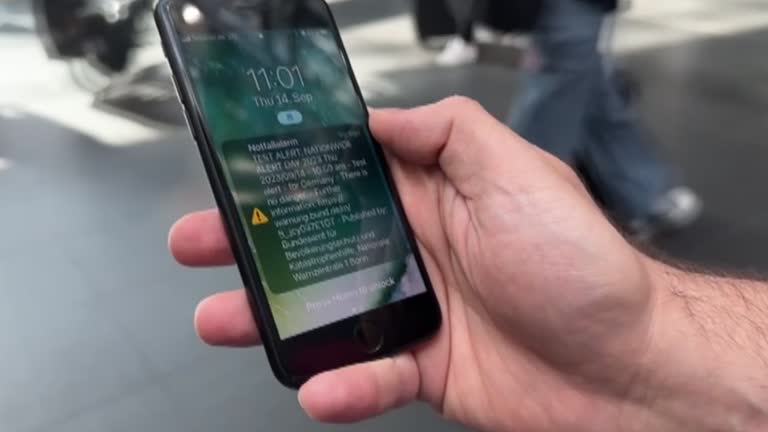
The UK government has announced its second nationwide test of the Emergency Alert System (EAS), designed to ensure mobile users can receive life-saving notifications during critical events.
The test will take place on Sunday, September 7, 2025, at 3 p.m. BST, reaching approximately 87 million 4G and 5G mobile phones across the UK.
Phones will emit a 10‑second loud siren and vibration—even if on silent mode.
A message stating “This is a test…” will appear, clearly indicating it’s not a real emergency.
The alert is broadcast via cell broadcast technology, meaning it doesn’t require internet or data access and is unaffected by network congestion.
Who Will Receive It
- All active 4G and 5G smartphones running iOS 14.5+ or Android 11+ in coverage areas en.wikipedia.org+
- Phones that are powered off, on 2G/3G networks, Wi‑Fi only devices, or those with alerts disabled will not receive the test.
Why It Matters
- The system has already been used to warn millions during real emergencies like Storm Éowyn, Storm Darragh, floods, and the Plymouth bomb evacuation lbc.co.uk+
- Regular testing ensures the system works properly in a crisis and builds public familiarity, helping to save lives by enabling fast action ciobulletin.com15.
Public Guidance
- Drivers are advised not to interact with their phones during the alert. They should find a safe place to stop before reading the message en.wikipedia.org
- Vulnerable individuals, including domestic abuse survivors, will be shown how to opt out or silence the alert in advance
Wider Preparedness Context
- This test aligns with broader national resilience efforts that include pandemic exercises, flood defense investments, and biological security upgrades
- The UK’s move mirrors practices in other countries like Japan, Canada, and the U.S., which conduct similar emergency broadcast drills theguardian.com.
On September 7 at 3 p.m., expect a sudden loud alert from your phone lasting about 10 seconds. It’s a test of the Emergency Alert System to ensure nationwide access to life-saving information, even on silent devices. No action is required—just listen, learn, and prepare.
Chairman Blames Cyber Group ‘DragonForce’ for M&S Security Breach
Marks & Spencer (M&S) chairman Archie Norman has confirmed that the ransomware attack disrupting the retailer’s online operations in April and May was orchestrated by the cybercriminal syndicate known as DragonForce, as revealed to U.K. lawmakers on July 8, 2025

- The attack began in late April, triggered by human error via a third-party service—believed to involve Tata Consultancy Services (TCS)—which provided initial system access to the hackers independent.co.uk+4digit.fyi+4thesun.co.uk+4.
- DragonForce deployed ransomware targeting VMware ESXi virtual servers, crippling M&S’s online ordering, click-and-collect functions, and even in-store contactless payments thetimes.co.uk+15infosecurity-magazine.com+15cybersecurefox.com+15.
- The breach forced M&S to suspend online shopping for six weeks across the UK, with operations only gradually resuming by mid-June cybersecurefox.com+15reuters.com+15mobileidworld.com+15.
Taunting Ransom Demand
- On April 23, M&S CEO Stuart Machin and several executives received an abusive ransom email from a hijacked TCS account, demanding payment via a darknet portal. The message declared: “We have marched the ways from China all the way to the UK and have mercilessly raped your company and encrypted all the servers.”
- The attackers referenced M&S’s cyber-insurance coverage and threatened to leak stolen data if demands weren’t met thetimes.co.uk+2digitalmarketreports.com+2digit.fyi+2.
Impact and Fallout
- The breach is projected to cost M&S around £300 million in lost profits, along with a decline in share value by over a billion pounds ft.com+15theguardian.com+15thetimes.co.uk+15.
- Though personal data of millions of customers (names, addresses, order history, phone numbers) was stolen, M&S asserts that payment information and passwords were not compromised reuters.com+15mobileidworld.com+15moneyweek.com+15.
- Recovery has been slow, with key features like click-and-collect still offline and full service restoration expected in August reuters.com+3moneyweek.com+3thetimes.co.uk+3.
About DragonForce
- DragonForce operates as a ransomware-as-a-service (RaaS) provider, leasing its toolkit to affiliates for a share of ransom proceeds digitalmarketreports.com+6infosecurity-magazine.com+6cybersecuritynews.com+6.
- The group has targeted major U.K. retailers in a coordinated wave, including Co‑op and Harrods, and is now widely attributed to the M&S breach independent.co.uk+4cybersecuritynews.com+4infosecurity-magazine.com+4.
- Cybersecurity experts note DragonForce affiliates often overlap with actors from the Scattered Spider collective, leveraging advanced social-engineering and RaaS models ft.com+10infosecurity-magazine.com+10cybersecurefox.com+10.
Response and Next Steps
- M&S declined to pay a ransom and is rebuilding systems from scratch, delaying full recovery but following government cyber guidance.
- The company has notified affected customers and mandated password resets, while monitoring for potential phishing or fraud attempts moneyweek.com+1mobileidworld.com+1.
- M&S is ramping up cybersecurity investments, conducting system audits, and working with law enforcement and national agencies to enhance future resilience .
The M&S cyberattack blamed squarely on DragonForce demonstrates the growing threat posed by RaaS groups capable of disrupting major corporations. With millions of customers impacted and hundreds of millions in losses, the case underscores the urgent need for strong cybersecurity protocols, rigorous third-party risk management, and real-time threat detection in modern retail.
Samsung Moves Deeper into Health Tech with Xealth Buyout
Samsung Electronics has announced its intent to acquire Xealth, a U.S.-based digital health platform known for helping clinicians prescribe digital tools and monitor patient engagement outside traditional care settings. This strategic move signals Samsung’s growing ambition to become a major player in the healthcare technology ecosystem, complementing its portfolio of smart devices, wearables, and AI-driven health initiatives.
What Is Xealth?
Founded in 2017 and backed by healthcare giants like Providence Health and Mayo Clinic, Xealth enables healthcare providers to seamlessly integrate digital health apps, educational content, and remote monitoring tools into electronic health records (EHRs). Its platform is designed to streamline doctor-patient engagement by making digital prescriptions and care plans accessible directly through existing clinical workflows.
Xealth’s tools are already in use across dozens of U.S. health systems, connecting over 100,000 physicians and millions of patients. The acquisition will provide Samsung with direct access to healthcare providers, a massive patient network, and a proven software infrastructure to support next-generation health services.
Samsung’s Strategic Vision in Healthcare
While Samsung is globally known for its smartphones, semiconductors, and consumer electronics, the company has been gradually expanding into digital health over the past decade. The Galaxy Watch series, for example, has added advanced biometric tracking features like ECG monitoring, sleep tracking, and body composition analysis.
By acquiring Xealth, Samsung appears to be doubling down on a strategy to move beyond consumer health tracking into clinical-grade healthcare integration. The acquisition also positions Samsung to compete more directly with companies like:
- Apple, with its growing HealthKit ecosystem and health research partnerships
- Google, which owns Fitbit and has invested heavily in AI-powered healthcare analytics
- Amazon, which has acquired One Medical and launched its own virtual care platform
Samsung’s broader vision likely includes building a comprehensive health platform—one that links wearables, smartphones, and cloud-based analytics with the clinical world, enabling more personalized and proactive care delivery.
Industry Implications
The acquisition comes amid a surge of interest in digital therapeutics, remote patient monitoring, and hospital-at-home models—accelerated by the COVID-19 pandemic and the shift toward value-based care. With healthcare providers under pressure to reduce costs and improve patient outcomes, platforms like Xealth are viewed as essential to modern care delivery.
By bringing Xealth into its ecosystem, Samsung can:
- Embed health services deeper into its mobile and wearable products
- Expand into enterprise healthcare solutions, targeting hospitals and insurers
- Leverage AI and sensor data to support clinical decision-making
- Improve data continuity between patients and providers
This aligns well with global health trends such as aging populations, chronic disease management, and the consumerization of healthcare.
The Future of Samsung Health
Following the acquisition, Xealth is expected to continue operating independently, with its platform being integrated into Samsung’s broader Samsung Health and Samsung Knox ecosystems. The move may also pave the way for Samsung to explore partnerships with major health systems, EHR vendors, or even pharmaceutical companies.
Samsung could also benefit from Xealth’s existing FDA-compliant and HIPAA-secure frameworks, accelerating its compliance and trust-building in regulated health markets.
Samsung’s acquisition of Xealth is more than a financial deal—it’s a strategic investment in the future of healthcare delivery. As digital health continues to transform how care is delivered, tracked, and reimbursed, Samsung is making clear it intends to be more than a hardware company. It wants to be a trusted partner in connected, intelligent, and patient-centered care.
With this move, Samsung joins the ranks of global tech leaders shaping the next frontier in healthcare innovation.
Apple’s Head of AI, Ruoming Pang, Departs for Meta
In a notable shakeup in the competitive artificial intelligence (AI) landscape, Ruoming Pang, a senior AI executive at Apple, has reportedly left the company to join Meta, according to a report by Bloomberg News. The move marks a significant talent shift between two of Silicon Valley’s biggest rivals as they race to dominate the future of AI.

Who Is Ruoming Pang?
Ruoming Pang is a respected AI researcher and engineer who has played a key leadership role at Apple in advancing machine learning models and AI infrastructure. Prior to Apple, Pang was associated with Google, contributing to foundational work in scalable systems and data science.
At Apple, Pang is believed to have overseen natural language processing (NLP), recommendation algorithms, and AI personalization frameworks used across services like Siri, Spotlight, and Apple Music. His exit could signal a gap in continuity for Apple’s internal AI roadmap—especially as the company begins to integrate more generative AI features across iOS and macOS.
Why This Move Matters
Pang’s transition to Meta comes at a critical time when:
- Apple has just announced its “Apple Intelligence” suite—a system-wide push to bring generative AI features like AI-powered writing tools, smart search, and on-device reasoning to its platforms.
- Meta is aggressively expanding its AI division, with a focus on open-source models like LLaMA, image generation tools, and integration of AI across Instagram, WhatsApp, and the Metaverse.
His move may not only accelerate Meta’s internal AI initiatives, but also reflect growing competition for top AI talent as tech giants pivot toward machine learning-led product development.
The AI Talent War Heats Up
Pang’s exit is part of a broader trend:
Top AI engineers and researchers are increasingly being poached, as companies seek to outperform rivals in LLMs, AI assistants, and edge computing. Apple, known for its secrecy and tight control over internal projects, may face challenges in both retaining and attracting AI specialists if more senior departures follow.
What This Means for Apple and Meta
- For Apple: Pang’s departure may slow the deployment or refinement of AI features unless a strong succession plan is in place. The company has historically kept its AI research private, which may make recruitment more difficult compared to rivals like Meta or Google, who embrace open-source contributions and public AI collaboration.
- For Meta: The hire represents a strategic win. With increasing investments in AI hardware, open-source models, and productivity tools, Meta is bolstering its AI brain trust at a time when it’s positioning itself as an alternative to proprietary models from OpenAI and Anthropic.
Ruoming Pang’s move from Apple to Meta underscores how critical AI talent has become to the future of tech innovation. As the global AI race intensifies, individual executive movements like this one can have significant ripple effects across product pipelines, investor confidence, and long-term market leadership.
PwC: Copper Constraints May Endanger a Third of Global Chip Production by 2035
A sweeping new report from PricewaterhouseCoopers (PwC) warns that by 2035, approximately 32% of global semiconductor output could be disrupted due to copper supply challenges a fourfold increase from today’s risk levels reddit.com+8mining.com+8reddit.com+8. Copper, crucial for tiny wiring in chips, is currently irreplaceable in terms of performance and cost, making the situation deeply concerning for the industry.

The Role of Copper in Semiconductor Production
Copper plays a vital role in chip production, powering the billions of tiny wires inside every semiconductor. However, copper production requires significant amounts of water, and climate change is exacerbating drought risks in major copper-producing countries.²
Countries at Risk
Major Copper-Producing Countries Affected:
- Chile: The world’s largest copper producer, Chile is already grappling with water shortages that are slowing down production. By 2035, most of the 17 countries supplying the chip industry will be at risk of drought.
- Peru: Another significant copper producer, Peru is also facing drought risks that could impact copper production and, in turn, global chip supplies.
Impact on Global Chip Production
The PwC report warns that the risk of copper supply disruptions will increase to between 42% and 58% by 2050. This could lead to:
- Supply chain disruptions: Droughts affecting copper production could cripple industries reliant on semiconductors.
- Increased risk of chip shortages: The last global chip shortage, fueled by pandemic-driven demand and factory shutdowns, had a devastating impact on the automotive industry and other chip-dependent sectors.³
The PwC report emphasizes the urgent need for industries to address the risks associated with climate change and copper supply disruptions. To mitigate these risks, companies can explore alternative materials, invest in water conservation efforts, and develop more efficient supply chains. By taking proactive steps, industries can reduce their reliance on copper and minimize the impact of potential supply disruptions.