

US Approves Nvidia H200 Chip Shipments to China: Trump Confirms Major Policy Shift
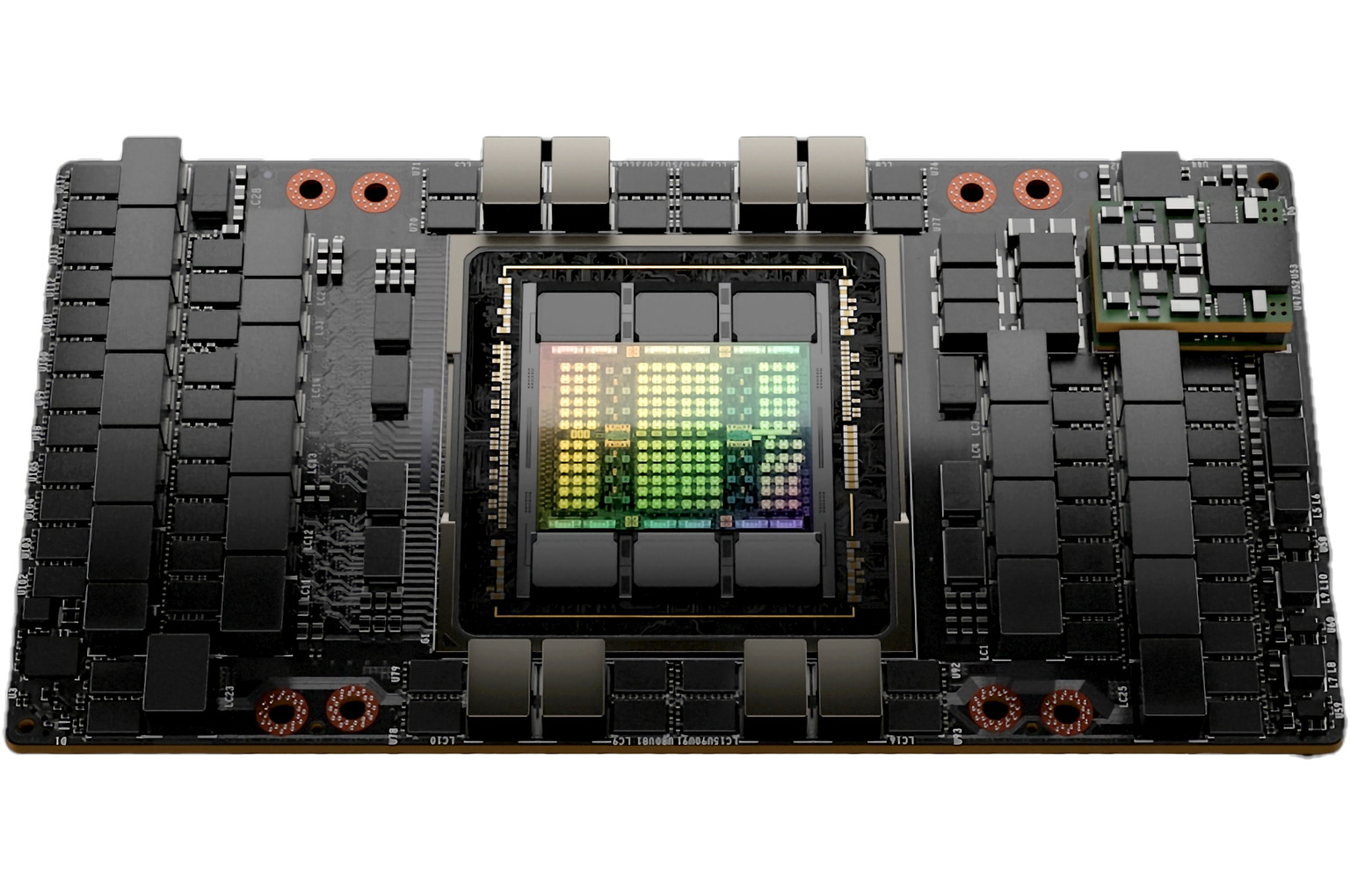
The United States will allow Nvidia’s (NVDA.O), opens new tab H200 processors, its second-best artificial intelligence chips, to be exported to China and collect a 25% fee on such sales, U.S. President Donald Trump said on Monday.
The decision appears to settle a U.S. debate. There is discussion about whether Nvidia and rivals should maintain their global lead in AI chips by selling to China. Alternatively, they might withhold the exports. Beijing has told companies not to use U.S. technology, leaving it unclear whether Trump’s decision would lead to new sales.
Nvidia (NVDA.O), opens new tab shares rose 2% in after-hours trading after Trump made the announcement on Truth Social, following a 3% rise during the day on a report by Semafor.
Trump said in his post that he had informed President Xi Jinping of China about the move. Nvidia’s chips are under government scrutiny there. Xi Jinping responded positively.
He said the U.S. Commerce Department was finalizing details of the arrangement and the same approach would apply to other AI chip firms such as Advanced Micro Devices (AMD.O), opens new tab and Intel (INTC.O), opens new tab.
Trump’s post said the fee to be paid to the U.S. government was “$25%”, and a White House official confirmed he meant 25%, higher than the 15% proposed in August.
“We will protect National Security, create American Jobs, and keep America’s lead in AI,” Trump wrote on Truth Social. “NVIDIA’s U.S. Customers are already moving forward with their incredible, highly advanced Blackwell chips. Soon, they will adopt Rubin. Neither of these chips are part of this deal.”
Trump did not say how many H200 chips would be authorized for shipment. He did not specify what conditions might apply. He only stated that exports would occur “under conditions that allow for continued strong National Security.”
Administration officials consider the move a compromise. It strikes a balance between sending Nvidia’s latest Blackwell chips to China. Trump has declined to allow this. It also strikes a balance with sending China no U.S. chips at all. Officials believe this would bolster Huawei’s efforts to sell AI chips in China, a person familiar with the matter said.
“Offering H200 to approved commercial customers strikes a thoughtful balance. These customers are vetted by the Department of Commerce. This approach is great for America,” Nvidia said in a statement.
Intel declined to comment. The U.S. Commerce Department, which oversees export controls, and AMD did not respond to requests for comment.
A White House official said that the 25% fee would be collected as an import tax from Taiwan, where the chips are made. The chips will then be sent to the United States. There, they will undergo a security review by U.S. officials before being exported to China.
FEARS OF CHIPS STRENGTHENING CHINA’S MILITARY
China hawks in Washington are concerned about selling more advanced AI chips to China. They fear this could help Beijing supercharge its military. These fears had first prompted limits on such exports by the Biden administration.

The Trump administration had been considering greenlighting the sale, sources told Reuters last month. Trump said last week he met with Nvidia CEO Jensen Huang and that the executive was aware of where he stood on export controls.
“It’s a terrible mistake to trade off national security for advantages in trade,” said Eric Hirschhorn, who was a senior Commerce Department official during the Obama administration. “It cuts against the consistent policies of Democratic and Republican administrations alike not to assist China’s military modernization.”
A report was released on Sunday by the non-partisan think tank, the Institute for Progress (IFP). It states that the H200 would be almost six times as powerful as the H20. The H20 is the most advanced AI semiconductor that can legally be exported to China. This follows the Trump administration’s reversal of its short-lived ban on such sales this year.
The Blackwell chip now in use by U.S. AI firms is about 1.5 times faster than H200 chips for training AI systems, the IFP said, and five times faster for inferencing work where AI models are put to use. Nvidia’s own research has suggested Blackwell chips are 10 times faster than H200 chips for some tasks.
Several Democratic U.S. senators in a statement described Trump’s decision as a “colossal economic and national security failure” that would be a boon to China’s industry and military.
Republican Representative John Moolenaar chairs the House China Select Committee. He said in a statement to Reuters that China would use the chips to strengthen its military capabilities. They would also enhance surveillance.
“Nvidia should be under no illusions – China will rip off its technology, mass-produce it themselves and seek to end Nvidia as a competitor,” he said.
CHINA EYES POTENTIAL SECURITY RISKS
The approval, however, comes as China is strengthening its resolve to wean the country off its reliance on Nvidia’s chips. China’s cyberspace regulator in July also accused Nvidia’s H20 chips of potentially carrying backdoor security risks, an allegation Nvidia has denied.
In recent months, Beijing has cautioned Chinese tech companies against buying chips that Nvidia downgraded to sell to the Chinese market, which are the H20, RTX 6000D and L20, two sources said.
“Chinese firms want H200s,” said Craig Singleton, a senior fellow at the Washington think tank Foundation for Defense of Democracies. “However, the Chinese state is driven by paranoia and pride. Washington may approve the chips, but Beijing still has to let them in.”
The H200 change of stance comes the same day that Trump’s Justice Department announced it had cracked a China-linked chip smuggling ring. This ring in late 2024 and early 2025 exported and attempted to export at least $160 million worth of controlled Nvidia H100 and H200 chips.
Chris McGuire, an expert on technology and national security, served at the U.S. State Department until this summer. He said Chinese firms would likely still buy H200s. This is because the chip “is better than every chip the Chinese can make.”
China’s domestic AI chip companies now include tech giant Huawei Technologies, which in September released a three-year product roadmap, as well as smaller players such as Cambricon (688256.SS), opens new tab and Moore Threads (688795.SS), opens new tab.
China’s SSE STAR Chip Index (.STARCHIP), opens new tab and the CSI Semiconductor Industry Index (.CSI931865), opens new tab both dropped more than 1% at market open on Tuesday but soon recovered most of the losses.





Related Articles

TikTok US Operations Shift to New Joint Venture
The social media landscape is experiencing a significant shift as ByteDance, the...
U.S. Government Investigates Ideological Content in China’s AI Platforms
In a growing sign of tech-national security tensions, the U.S. government is...